Team 3128 · Aluminum Narwhals

Controls

A finite-state-machine architecture built on a shared common library, field-relative swerve control, multi-camera vision, and a custom web dashboard — designed for reliability under match conditions.

State Machine Architecture

Software Design
Each subsystem is modelled as a finite state machine. Mechanisms hold distinct states and a transition map governs every valid move between them — making robot behaviour predictable, testable, and easy to debug mid-match.
NAR_Subsystem Interface
Specifies the functionality and expectations every subsystem on the robot must satisfy
Enforces a consistent API across all mechanisms
NAR_PIDSubsystem
Custom PID subsystem class with quality-of-life additions over WPILib's base
Shared across Position, Velocity, and Voltage subsystem types
Mechanism Types
Position-based — elevator, pivot, climber
Velocity-based — shooter drum
Voltage-based — rollers, manipulator
Transitions & Transition Maps
Maps a named "state" of the subsystem to a set of mechanism target states
Default states are the entry point; exclusive states are only reachable from a specific default
The default → exclusive pairing creates a clear visual model of robot intent
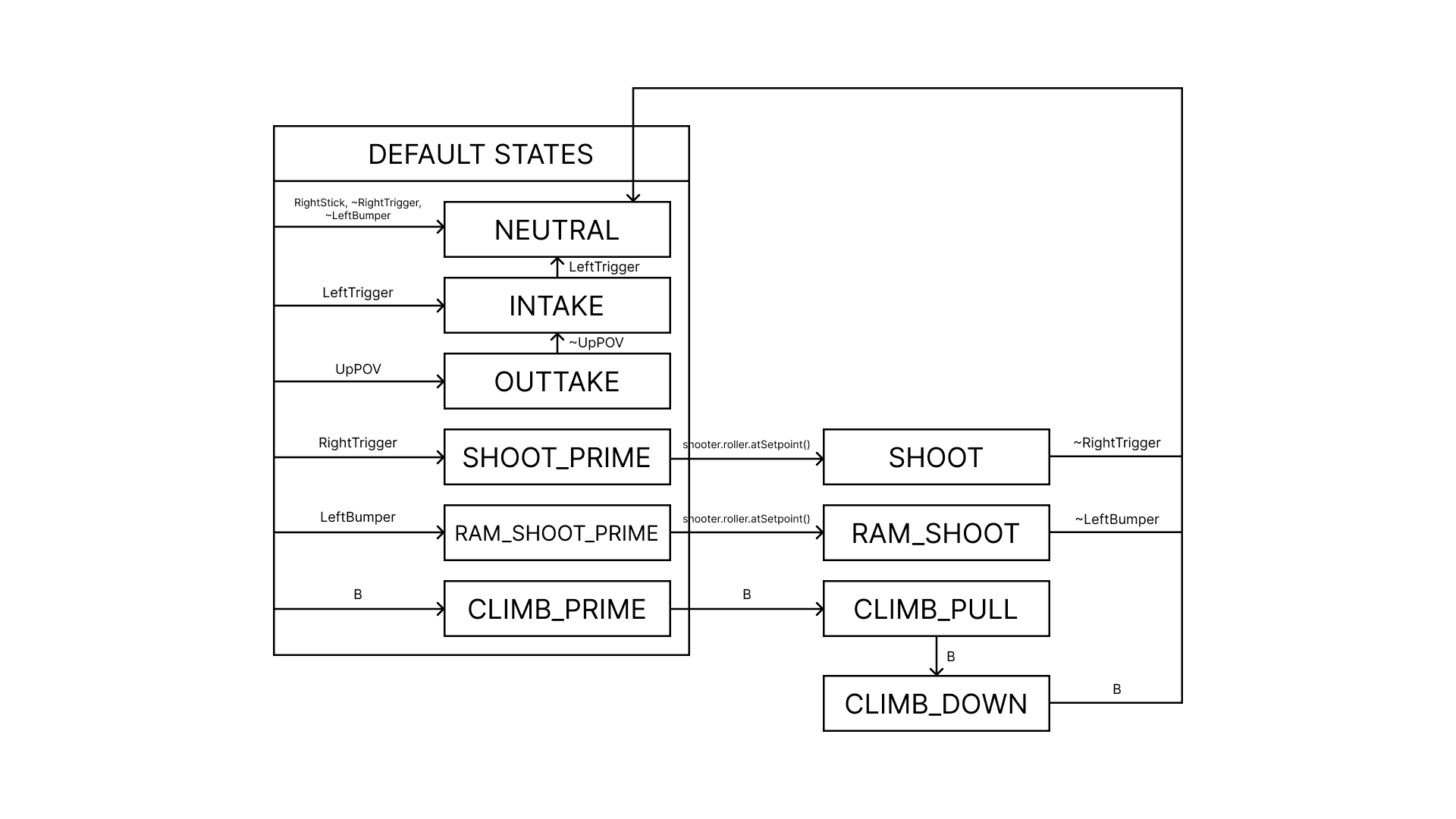
Superstructure state diagram — top-level coordination of all subsystems
Superstructure

Superstructure state diagram — top-level coordination of all subsystems

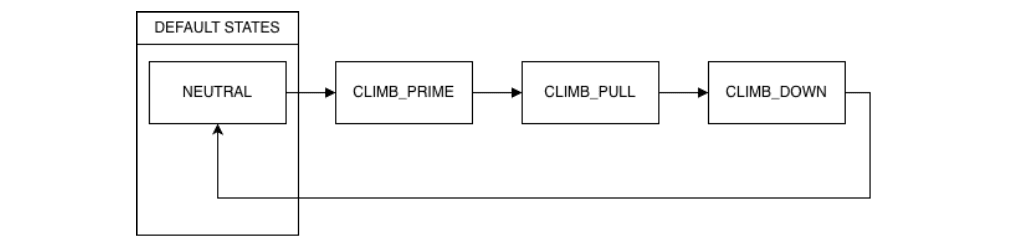
Climber state diagram
Climber

Climber state diagram

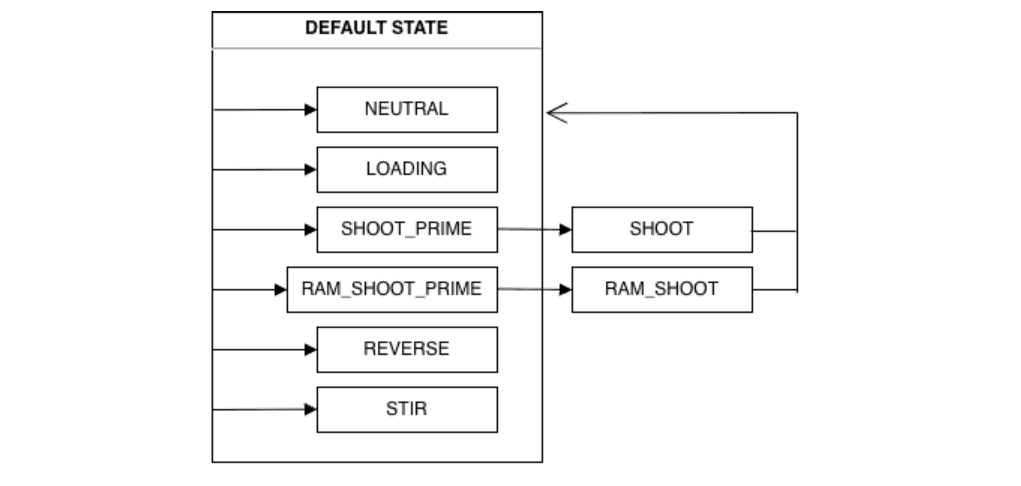
Shooter state diagrams
Shooter

Shooter state diagrams

Vision & Odometry

Pose Estimation
Four cameras — two OV2311s and two Luma P1s — run off a Raspberry Pi with PhotonVision, maximising AprilTag visibility at all field positions. Gyro-stabilised inputs filter out unreliable estimates before they reach the pose estimator.
Vision Setup
2× OV2311 + 2× Luma P1 cameras on a Raspberry Pi running PhotonVision
Four cameras for maximum AprilTag coverage at all field positions
PhotonVision settings tuned to maximise accuracy
Tag Filtering
Ambiguity — reject any tag with pose ambiguity above 0.3
Distance — filter tags beyond ~4.0 m
ID filtering — reject tags identified through testing as detrimental to pose accuracy
Pose Utilisation
Autonomous — pose estimates guarantee consistency regardless of field conditions
Auto-align to hub for shooting from anywhere with a single button
Auto-align to tower for climbing — reaches and climbs within 4 seconds
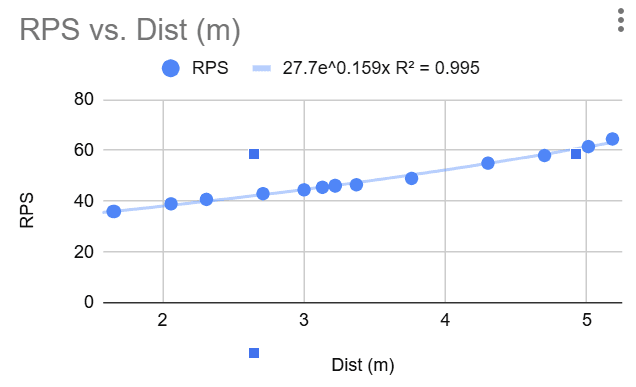
Shooting interpolation — shooter voltage computed from distance to hub in real time

Autonomous Control

Auto
Pose-based auto routines execute scoring and alignment sequences without driver input. A system-check mode lets the team verify all subsystems between matches with a single button press.
Auto Movement
Auto-alignment to hub with shooting interpolation — shoot from any field position
Auto-alignment to nearest tower for climbing — full sequence in under 4 seconds
Shooter voltage interpolated from hub distance for consistent scoring
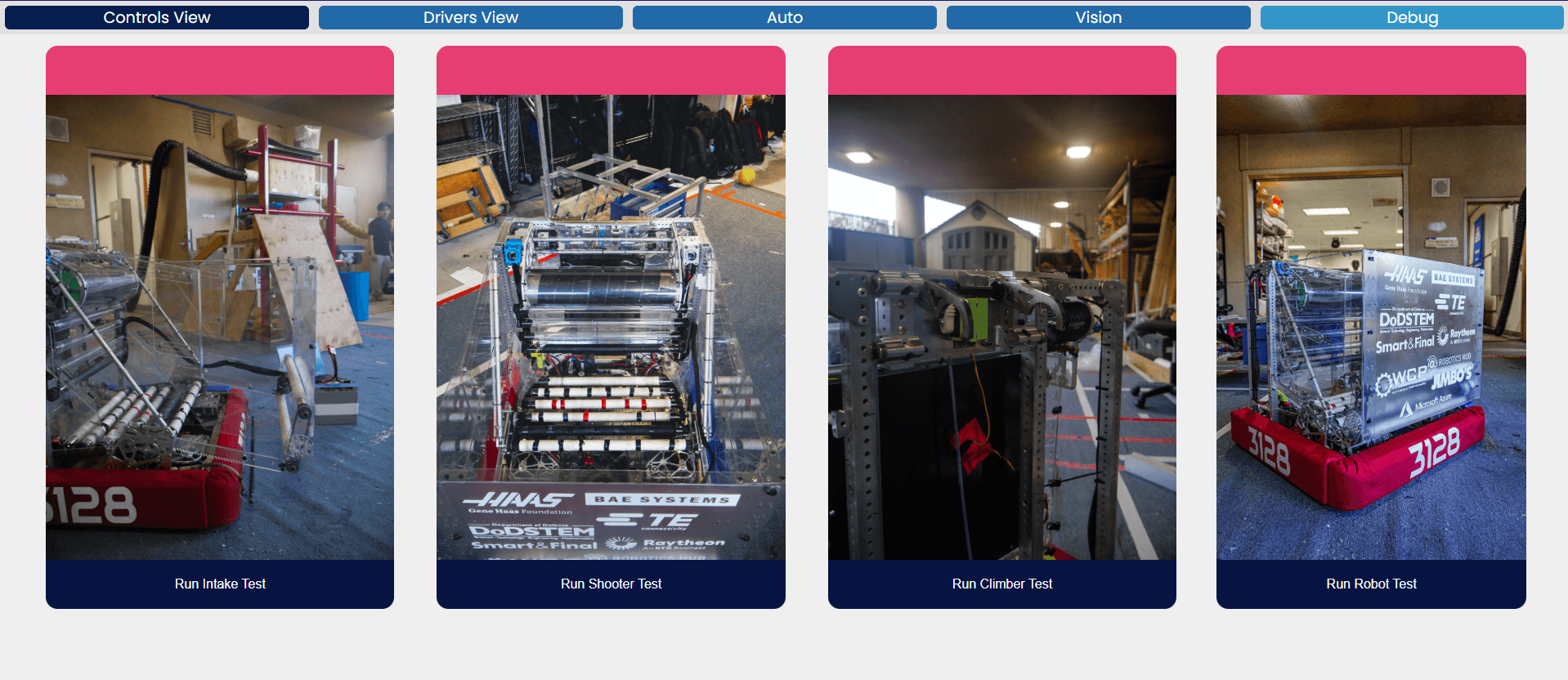
System Check
Single button press runs a check routine across all subsystems
Used between matches to quickly confirm full robot functionality
System check readout — pass/fail per subsystem
System Check

System check readout — pass/fail per subsystem

Shooter interpolation — RPS vs. distance from hub
Interpolation

Shooter interpolation — RPS vs. distance from hub

Common Repository

3128-Common
Code reused across seasons lives in a shared GitHub repository, distributed via JitPack the same way vendordep libraries like Phoenix and REVLib are consumed — one dependency update propagates to all users instantly.
Repositorygithub.com/Team3128/3128-common
DistributionJitPack (vendordep-style)
Access methodGit submodule within robot repo
Update modelSingle dependency bump — propagates to all users
Library Contents
Swerve base — field-centric drive, module control, odometry
Subsystem templates — NAR_PIDSubsystem, FSM base, Position / Velocity / Voltage bases
Transitions and transition maps
Control systems — PID, feed-forward, trapezoidal PID
Motor wrappers, Shuffleboard interface, Narwhal Dashboard WebSocket
Vision processing, SysID utilities
Controller wrappers — Xbox, button boards

Narwhal Dashboard

Custom Dashboard
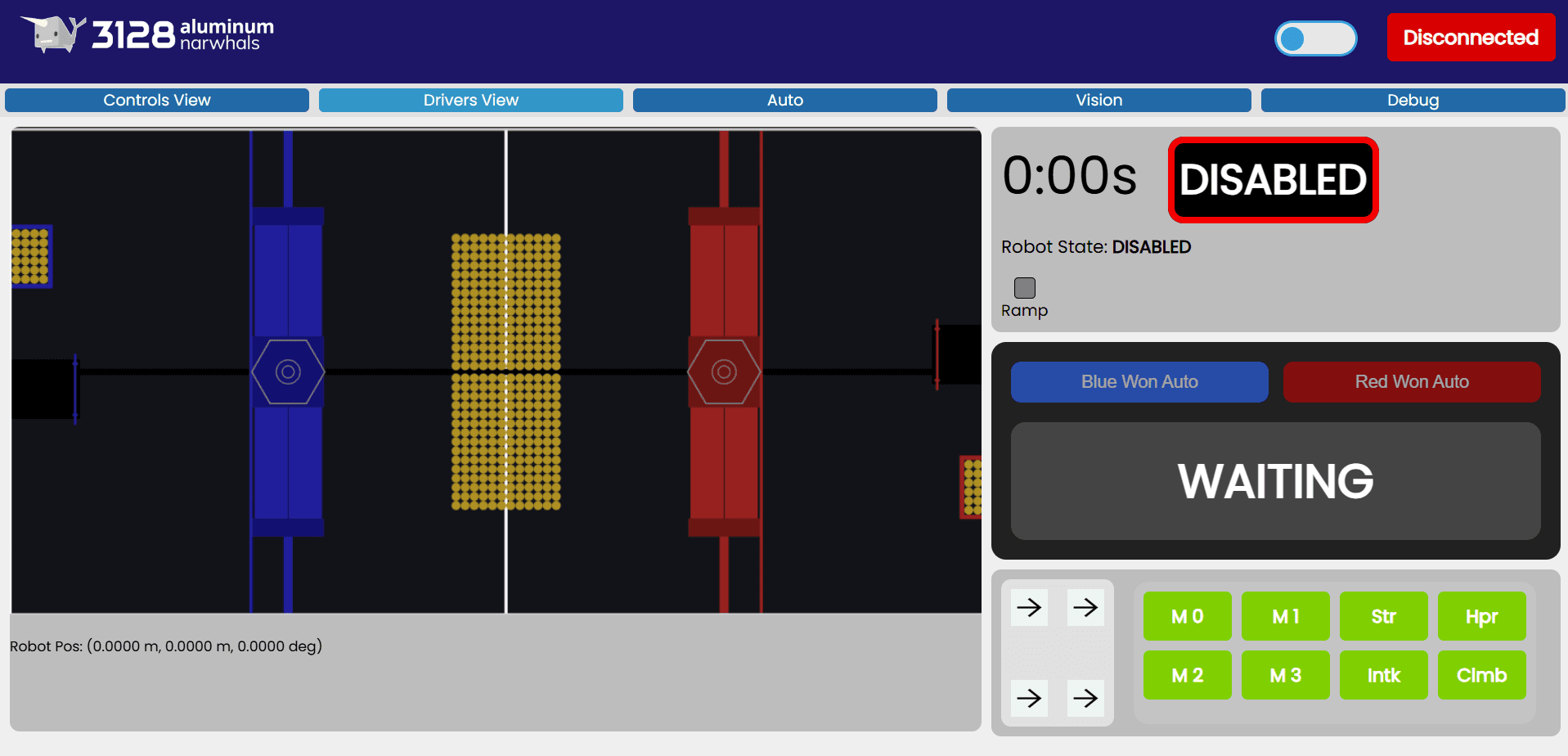
A custom React web dashboard that replaces WPILib's built-in dashboards with a faster, more flexible, and team-specific alternative — built to serve drivers during matches and programmers during testing.
Purpose
Offloads data processing from the RoboRIO to the driver station computer
Unified tool for drivers (match-day telemetry) and programmers (debugging and tuning)
Implementation
Written in React JS (HTML / CSS / JS)
Connects to the RoboRIO via a Java WebSocket server, receiving tagged JSON data
Annotation processor on the Java side marks fields for automatic dashboard exposure
Modular widget system — panels can be rearranged and toggled without code changes
Narwhal Dashboard — full match-day layout with swerve telemetry, subsystem states, auto selector, and vision overlay
Dashboard

Narwhal Dashboard — full match-day layout with swerve telemetry, subsystem states, auto selector, and vision overlay

Back to BinderTeam 3128 · Aluminum Narwhals